Connecticut: where the fire marshal watches the dig
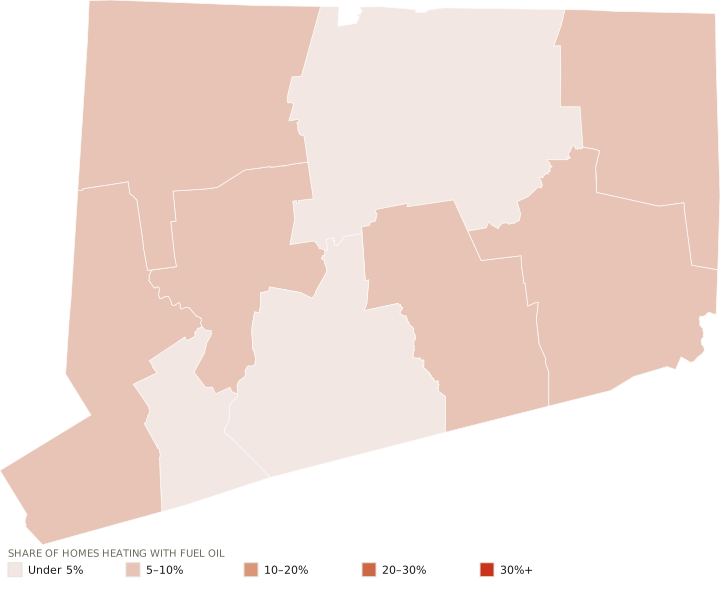
Connecticut has the highest oil-heat share of the five states we cover — 5.8% of households, nearly one home in seventeen — because the natural gas grid never fully reached the small towns that make up most of the state's land area. That means two things for a homeowner. First, oil tanks here are ordinary infrastructure, and the trades that service them are everywhere. Second, the housing stock that carries them is old, and the underground steel tanks of the 1950s–1970s installations are decades past their design life whether or not they're still in use.
Census ACS 2020–2024, table B25040.
What it costs in Connecticut
| Line item | Typical range |
|---|---|
| Underground removal, clean soil | $1,500–$3,800 |
| Difficult access | up to ~$5,000 |
| Closure in place | $1,000–$2,500 |
| Tank sweep | $150–$500 |
| Soil sampling and lab analysis | $300–$1,000 |
| Remediation if a leak is confirmed | $3,000–$15,000; most residential $8,000–$10,000; severe $100,000+ |
Two cost drivers are distinctly Connecticut. Fairfield County pricing behaves like Westchester's — high labor, tight lots, ledge rock — and pulls quotes toward the top of the range, while the Quiet Corner and Litchfield Hills price lower but can carry mobilization charges when the nearest qualified crew is forty minutes away. And because DEEP guidance calls for laboratory soil analysis at removal, the sampling line item is less optional here than homeowners expect; treat $300–$1,000 for sampling as part of the real price, not an add-on.
Who regulates what
Connecticut splits the job three ways, and it helps to know which office owns which piece:
| Who | What they control |
|---|---|
| Local fire marshal | Must be notified before a residential underground tank comes out, and checks the excavation for evidence of leakage. Leakage gets reported up to DEEP. |
| Town building department | Issues the removal permit ($50–$500 typical) and inspects the work like any other regulated site job. |
| CT DEEP | Owns contamination. DEEP recommends soil from beneath the tank and piping be analyzed for ETPH at a Connecticut-certified lab; concentrations above 500 ppm mean more soil comes out. Confirmed releases become DEEP matters until cleaned up. |
Two useful facts sit behind that table. There is no Connecticut law forcing you to remove a non-leaking residential tank — the pressure is contractual, not statutory. And the contractor doing the work should be registered with the state Department of Consumer Protection as a home improvement contractor; ask for the registration number before you sign. What happens financially when soil comes back dirty — insurance, and what limited help exists — is on the CT financial relief page.
The fire marshal's presence is worth planning around rather than resenting. It means the excavation gets a contemporaneous, independent record: an official saw the tank come out and saw the soil beneath it. If the hole is clean, that observation plus your ETPH lab report is the strongest close-out file a Connecticut homeowner can hold. If it isn't clean, the report to DEEP happens through the proper channel on day one, which is cheaper in every sense than a buyer's environmental consultant finding the same contamination two years later. Schedule the removal when the marshal can attend; a day's flexibility buys you a witness.
The transaction reality
Because oil heat is so normal in Connecticut, the market's tank anxiety concentrates on one word: underground. A basement tank barely registers in a sale. A buried one triggers the now-standard sequence — buyer's inspector flags it, buyer's attorney requests removal or recent soil data, buyer's insurer gets asked whether it will write the policy. Carriers in Connecticut increasingly treat unknown buried tanks as an underwriting problem, and in the Fairfield County market, where deals move fast and buyers waive little else, the tank contingency is one of the few that survives.
The homeowner's leverage math: the fire-marshal notification and town permit add days, not dollars, to a planned removal — but they make a mid-contract removal harder to rush than buyers expect. Sellers who wait for the buyer's demand end up paying the same $1,500–$3,800 under a deadline the town's inspection calendar controls. Doing it before listing converts a negotiation risk into a folder of paperwork: permit, fire marshal sign-off, clean ETPH results.
Where to go from here
- Find CT tank contractors — DCP registration, insurance, and matching by town.
- CT financial relief — what exists, what doesn't, and the insurance angle.
- Tank sweep — for the house that converted to gas decades ago and never produced tank paperwork.
- Underground tank removal — the job step by step, sampling included.
- Cost estimator — a range tuned to your lot and region.
Ready to price the real job? The contractor contact form takes your ZIP and tank details and matches you with licensed Connecticut contractors.