Pennsylvania: a quarter-million tanks, the region's lowest prices, the least state help
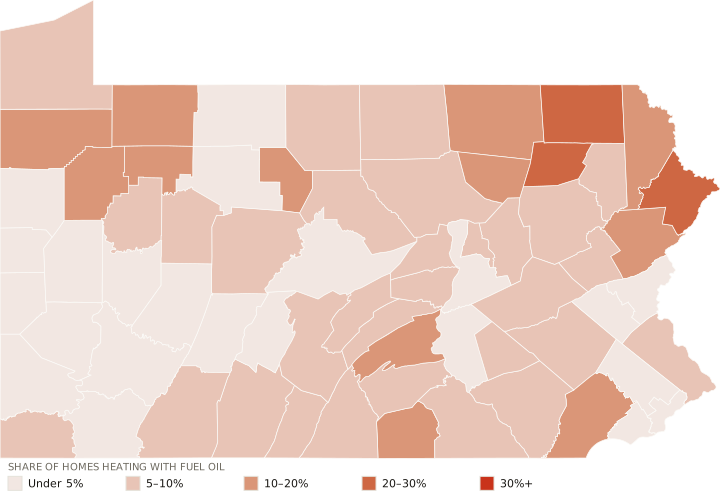
268,994 Pennsylvania homes heat with oil, second only to New York in our coverage, and the map is the inverse of what outsiders expect: it's not Philadelphia's old rowhomes that lead, it's the rural northeast. Susquehanna, Pike, and Wyoming counties each have more than a fifth of their homes on oil, because the gas grid — even in the state that produces the gas — never reached them. Add the tanks retired during decades of conversions in the Philadelphia and Pittsburgh suburbs, and Pennsylvania has one of the largest inventories of aging heating oil tanks in the country.
Census ACS 2020–2024, table B25040.
What it costs in Pennsylvania
| Line item | Typical range |
|---|---|
| Underground removal, clean soil | $1,200–$3,200 |
| Difficult access | up to ~$5,000 |
| Closure in place | $1,000–$2,500 |
| Tank sweep | $150–$500 |
| Soil sampling and lab analysis | $300–$1,000 |
| Remediation if a leak is confirmed | $3,000–$15,000; most residential $8,000–$10,000; severe $100,000+ |
Pennsylvania's price advantage is real and structural: lower labor rates than the coastal states, abundant in-state disposal capacity, and lighter permitting in many townships. The caveats run the other way. Rural jobs in the northern tier can carry meaningful travel charges when the nearest qualified crew is a county away, and the state's terrain — ledge in the ridge-and-valley counties, tight urban lots in the southeast — moves individual quotes the same way it does everywhere. Township and borough permit practices vary more here than in any other state we cover; some want $50 and a form, some want engineered backfill notes. Get the permit question answered in the quote.
Who regulates what
The Pennsylvania Department of Environmental Protection (PA DEP) regulates storage tanks under the state's Storage Tank and Spill Prevention Act — but residential heating oil tanks sit almost entirely outside that regime. A typical 275–550 gallon home heating tank is not a state-regulated tank: no registration, no state removal mandate, no DEP permit for the dig. Removal paperwork, where it exists, is a township or borough matter. DEP's jurisdiction arrives with contamination: a release of heating oil to soil or groundwater is reportable, and cleanups proceed under DEP oversight until the site meets state standards.
One claim deserves a hard look, because contractors sometimes wave it around: Pennsylvania's Underground Storage Tank Indemnification Fund (USTIF) covers regulated tanks, and its opt-in for unregulated heating oil tanks applies only to tanks of 3,000 gallons or more. A normal residential tank is an order of magnitude too small to even opt in. If your tank leaks, USTIF is not your safety net — your homeowner's policy and your own funds are the realistic candidates, and the honest breakdown is on the PA financial relief page.
The transaction reality
Pennsylvania's market pressure is younger than New Jersey's but moving the same direction. In the Philadelphia collar counties — Bucks, Montgomery, Chester, Delaware — buyer agents increasingly order tank sweeps on any pre-1980 house with a conversion history, and relocation buyers arriving from New Jersey and New York bring their home states' tank reflexes with them. Insurers are the quiet enforcers: carriers writing Pennsylvania homes ask about buried tanks on applications, and an undisclosed tank discovered later is a claims-time problem nobody wants.
Because there's no state fund behind a residential leak, the risk asymmetry is stark in Pennsylvania: the removal that settles the question costs $1,200–$3,200, while a leak discovered under a buyer's deadline starts at $3,000 in remediation and climbs from there, with every dollar yours. The lowest removal prices in the region make the pre-emptive move cheaper here than anywhere else. That's the whole argument, and it doesn't need dressing up.
One Pennsylvania-specific note on active tanks: in the rural counties where oil heat is still the default, the question is usually replacement rather than abandonment. If your buried tank is being retired in favor of a new aboveground or basement tank, price the removal and the new installation as one project — crews that do both are common here, mobilization gets paid once, and the trench for new lines often doubles as access to the old tank. The aboveground tank page covers the far cheaper other half of that swap.
Where to go from here
- Find PA tank contractors — coverage from the collar counties to the northern tier.
- PA financial relief — USTIF's actual limits, insurance, and what's left.
- Tank sweep — the $150–$500 answer to "did the conversion crew pull the tank in 1987?"
- Underground tank removal — scope, steps, and what a complete job includes.
- Cost estimator — a range adjusted for your county and access.
To move from ranges to real bids, the contractor contact form matches your ZIP and tank details with licensed Pennsylvania contractors.